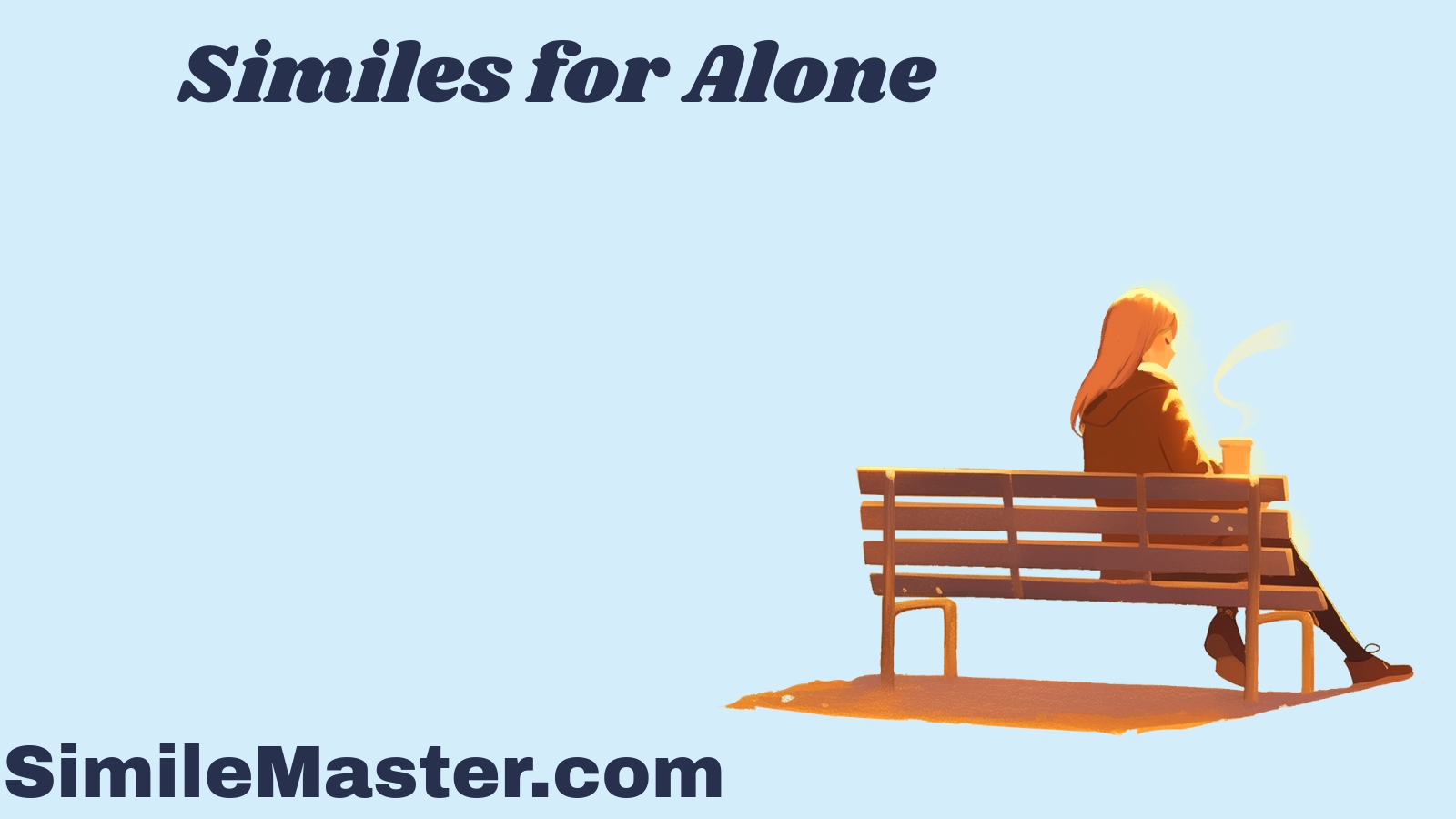
Have you ever felt like you were the only person in a huge room? Or watched a single bird flying across the sky with no others nearby? Those quiet moments often inspire powerful writing. One of the best ways to describe those feelings is by using similes for alone.
A simile compares two different things using the words “like” or “as.” It helps readers imagine emotions and scenes more clearly. Instead of simply saying someone was alone, you can say they were “as lonely as a cloud drifting across the sky” or “like a single candle in the dark.” These comparisons make stories, poems, essays, and conversations more vivid and memorable.
Whether you’re a student learning English, a teacher searching for classroom ideas, or a writer looking to improve your descriptions, this guide will help you discover over 20 creative similes for being alone. You’ll also find examples, activities, worksheets, a short story, and practical tips to make your writing stronger and more expressive.
Let’s explore how a simple comparison can turn an ordinary sentence into something unforgettable.
What Are Similes for Alone?
Similes for alone are comparisons that describe someone or something that is by themselves. They use the words “like” or “as” to create a clear mental picture.
Simple Definition
A simile compares two different things to make writing more interesting.
Examples:
- She stood like a lone tree in an empty field.
- He was as alone as the last leaf on a branch.
These comparisons help readers understand feelings of loneliness, independence, quietness, or isolation.
Why Are Similes for Alone Important?
Using similes improves both creative and academic writing.
Benefits
- 📖 Makes descriptions more vivid
- ✍️ Improves storytelling
- 🎨 Sparks imagination
- 💬 Makes emotions easier to understand
- 🎓 Builds stronger English vocabulary
- 🌟 Makes essays and poems more engaging
Instead of repeating the word alone, you can express the feeling in many creative ways.
20+ Similes for Alone with Meanings and Examples
| Simile | Meaning | Example Sentence |
|---|---|---|
| As alone as an island | Completely isolated | He felt as alone as an island after moving away. |
| Like a lone wolf | Independent or isolated | She worked like a lone wolf on the project. |
| As lonely as a cloud | Quiet and separated | The balloon floated as lonely as a cloud. |
| Like a single star | The only one visible | The light shined like a single star. |
| As alone as a desert road | Nobody around | The street was as alone as a desert road. |
| Like a forgotten book | Ignored | He sat like a forgotten book on the shelf. |
| As silent as the moon | Quiet and alone | She waited as silent as the moon. |
| Like a leaf in winter | Isolated | The child stood like a leaf in winter. |
| As empty as an abandoned house | Lonely | His heart felt as empty as an abandoned house. |
| Like a bird without a flock | Without companions | She wandered like a bird without a flock. |
| As quiet as midnight | Peaceful and alone | The room became as quiet as midnight. |
| Like one candle in darkness | Standing alone | Hope burned like one candle in darkness. |
| As still as a mountain | Calm and solitary | He remained as still as a mountain. |
| Like a shell on the beach | Alone among many | She felt like a shell on the beach. |
| As distant as a faraway star | Emotionally separated | He seemed as distant as a faraway star. |
| Like the last flower in autumn | The only one left | The rose looked like the last flower in autumn. |
| As isolated as a lighthouse | Standing alone | The tower stood as isolated as a lighthouse. |
| Like an empty bench | Waiting alone | He sat like an empty bench in the park. |
| As lonely as winter rain | Deep loneliness | Her voice sounded as lonely as winter rain. |
| Like the final page of a book | End and solitude | She smiled like the final page of a book. |
| As solitary as an eagle | Proud and independent | He hunted as solitary as an eagle. |
| Like one pebble on the shore | Small and alone | The child stood like one pebble on the shore. |
Fun and Creative Similes for Alone 🎨
Here are some imaginative comparisons children and writers will enjoy.
- Like the only cookie left in the jar 🍪
- As lonely as one sock without its pair 🧦
- Like a balloon floating into the sky 🎈
- As alone as one snowflake falling early ❄️
- Like the last popcorn in the bowl 🍿
- As quiet as one butterfly in a garden 🦋
- Like a puzzle piece without the puzzle 🧩
- As alone as one kite in a windy sky 🪁
These playful similes make writing more colorful and memorable.
School and Classroom Examples
Students often need similes in essays and creative writing.
Examples
- I felt like a lone wolf on my first day at school.
- The empty classroom was as quiet as midnight.
- My pencil rolled across the desk like a lonely traveler.
- The last student waited like one candle in darkness.
- The playground looked as empty as an abandoned house after school ended.
Mini Story Using Similes for Alone
Emma had just started at a new school. During lunch, she sat quietly like a shell on the beach, watching everyone laugh together.
For a moment, she felt as alone as an island in the middle of the sea. But then another student smiled and invited her to join a game.
Soon, the lonely feeling disappeared, and Emma realized that even the longest lonely moments can lead to wonderful friendships.
Interactive Activities
Activity 1: Match the Simile
Draw a line between the simile and its meaning.
| Simile | Meaning |
|---|---|
| Like a lone wolf | Independent |
| As lonely as winter rain | Deep sadness |
| Like a single star | Only one visible |
| As isolated as a lighthouse | Standing alone |
Activity 2: Create Your Own Simile ✍️
Finish these sentences.
- I felt as alone as __________.
- The tree stood like __________.
- My room became as quiet as __________.
- The bird flew like __________.
- The beach looked as lonely as __________.
Practice Worksheet
Fill in the blanks.
Choose the correct simile.
- She stood __________ in the empty hallway.
- The old house was __________.
- He worked __________ without asking for help.
- The park became __________ after sunset.
- The balloon floated __________ across the sky.
Possible Answers
- like a lone wolf
- as lonely as a cloud
- as empty as an abandoned house
- like a single star
- as quiet as midnight
Common Mistakes When Using Similes
Avoid these common errors.
❌ Forgetting “like” or “as”
Incorrect:
He was a lone wolf.
Correct:
He was like a lone wolf.
❌ Using confusing comparisons
Choose comparisons that readers can easily imagine.
❌ Overusing similes
Too many similes in one paragraph can make writing feel crowded. Use them where they add the most impact.
❌ Mixing emotions
Pick a simile that matches the mood of your sentence.
Quick Quiz
Choose the best answer.
1. Which word usually appears in a simile?
- A. because
- B. although
- C. like
- D. therefore
✅ Answer: C
2. Which simile best describes loneliness?
- A. Like a busy bee
- B. As alone as an island
- C. Like a racing car
- D. As bright as the sun
✅ Answer: B
3. Why do writers use similes?
- A. To make writing more descriptive
- B. To shorten stories
- C. To remove details
- D. To confuse readers
✅ Answer: A
(FAQs)
What is a simile for alone?
A simile for alone compares someone’s loneliness or independence to something else using like or as, such as “as alone as an island.”
Why should students learn similes?
Similes improve vocabulary, strengthen creative writing, and help readers imagine ideas more clearly.
Can similes describe positive solitude?
Yes. Some similes describe peaceful independence rather than sadness, such as “like a lone wolf” or “as solitary as an eagle.”
Are similes useful in essays?
Absolutely. They make descriptive and narrative essays more engaging without making the writing difficult to understand.
How can I create my own simile?
Think about the feeling you want to describe, then compare it to something with similar qualities using like or as.
Conclusion
Learning similes for alone helps you describe emotions and situations with greater creativity and precision. Instead of simply saying someone is alone, you can paint a vivid picture with comparisons that readers instantly understand.
Whether you’re writing a school essay, a poem, a story, or simply practicing English, these similes will make your writing more expressive and memorable.
Keep reading, observing the world around you, and creating your own unique comparisons. The more similes you use thoughtfully, the more colorful and engaging your writing will become. Happy writing! ✨